
Headless Magento - a modern e-commerce architecture
what is headless Magento, headless Magento store, Magento with a decoupled frontend, headless Magento implementation, headless Magento agency, Magento software house
We value your opinion
In recent years, we have built e-commerce stores, web applications, and mobile apps for many amazing people.












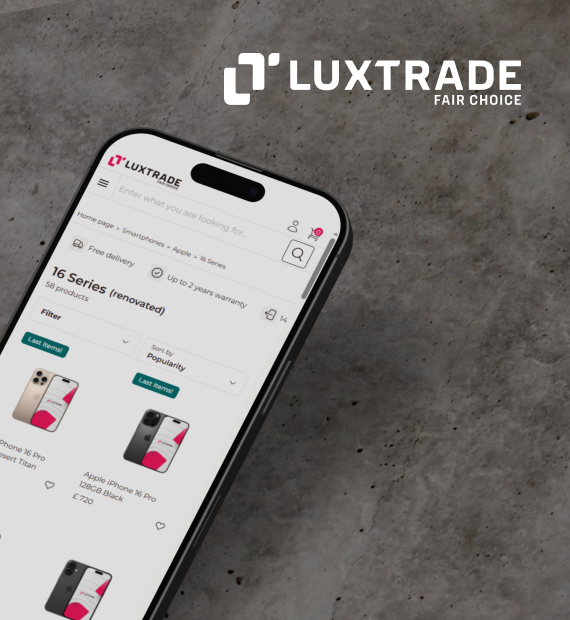
“It is a great pleasure to recommend Sopchy as a reliable partner […] Their approach to work is based on a solid understanding of the end user, which allowed us to achieve our intended business goals. […] We have faced many challenges together and could always count on their support and professional advice. […]”

Krystian Stolecki
Luxtrade
“[…] What pleasantly surprised us was the agency’s comprehensive approach to the project itself, referencing literature to justify the product card layout, presenting trends, and being ready to develop joint solutions.[…]”

Katarzyna Matusiak
Co-Founder - Carein
“First of all, I would like to emphasise the good and prompt communication with all members of the Sopchy team, especially with Mr Michal Tumilowicz - throughout the project I was kept informed about its current status and the planned next steps. […]”

Wojciech Kremer
Kremer Legal
“We are very satisfied with our collaboration with Sopchy on the development of modules designed for easy and intuitive integration of PayEye payments with e-commerce systems. Sopchy is not only a team of skilled specialists but also a partner who understands our needs perfectly […]”

Daniel Jarzab
CEO at PayEye Company
“I recommend working with Sopchy to everyone. Communication, project execution, and delivery are of the highest standard. Professionals who truly know their craft.”

Kamila Wozny
Sollkat
“[…] We sought help from around 10 programmers and server specialists in other fields, but it didn’t yield any results. Fortunately, we found Sopchy, where, in addition to extensive expertise, we experienced excellent customer service and support. We have now been working together for several months and intend to maintain this collaboration for a long time.”

Piotr Wojtkow
CEO - Wojtków Szkolenia and Psiedszkole
The Sopchy team implemented our idea for custom software that enables smooth and convenient appointment bookings with our specialists. They not only managed to create solutions convenient for our patients but also streamlined operations across four locations. […]”

Malgorzata Wozniak
HappyLife
Featured online store projects
We design, build and maintain online stores and bespoke solutions for the e-commerce sector.


Headless Magento - what it is and when it's worth choosing
Magento is one of the most popular systems for building online shops. It's chosen mainly by larger companies, as it offers an enormous range of features. However, more and more shops now run in a headless model. This is Magento with an independent front end, meaning a separately built part that the customer actually sees.
In this article, we explain how headless Magento works and how it differs from a classic shop. We also show why it runs faster, who it suits, and what the cost of implementation depends on.
1. What is headless Magento?
Headless Magento is a shop split into two separate parts. The first is the back end. This is where Magento operates, managing products, prices, stock levels, orders and customers. It's the heart of the shop, where all the sales logic takes place.
The second part is the interface, or front end. This is everything the customer sees and clicks on: the homepage, product cards, the basket. In the headless model, the interface is built independently of Magento. Developers build it using modern technologies such as React, Next.js or Vue.js.
Both parts are connected by an API. This is the 'link' through which the interface requests data from Magento, and Magento sends it back. That's why people also refer to Magento in a modern API architecture. To the customer, the shop works as a single whole, even though it actually consists of two cooperating systems.
This solution has another advantage. A single Magento back end can serve several interfaces at once. The same system can power an online shop, a mobile app and a B2B platform, meaning sales to businesses. That way, you keep products, prices and orders in one place.
2. Classic Magento vs headless Magento - the differences
In classic Magento, a single system does everything. It handles the back end and displays the shop at the same time. Both layers are tightly connected, so a change in one often requires changes in the other.
Magento with a separated interface works differently. The back end and the front end are two separate projects. Each of them can be developed and improved independently. This leads to three main differences:
Speed - a headless shop usually loads faster. We explain this in the next section.
Easier fixes - when something stops working, it's easier to find the source of the problem. Changes to the front end don't affect the back end, and vice versa.
Design freedom - the front end isn't limited by Magento templates. You can build an interface tailored precisely to your customers.
3. Why does headless Magento work faster?
A classic shop loads a lot of resources at once every time someone visits the page. Some of them aren't actually needed at that moment. Even so, each one puts a load on the system and lengthens the page loading time.
Headless Magento works differently. The front end fetches only the data it needs at that particular moment via an API. Each element is queried separately, and only when it's actually required. The server has less work to do, and the page loads faster.
There's a second reason too. The front end operates independently of the back end, so it can be fine-tuned for speed without any changes to Magento. Developers can optimise the interface while the back end keeps running without interruption.
4. Which shops does headless Magento suit best?
Headless Magento works best for medium and large shops - ones with an extensive range, lots of products and lots of orders. At that scale, speed and performance matter most, since every second of loading time affects the shopping experience.
It's also a good choice if you sell across several channels. You can then manage your website, mobile app and B2B sales from a single system. There's no need to update products or prices in several places separately.
Headless is also useful when a shop needs custom functionality. This could be a shop selling made-to-order products, where the customer configures the parameters themselves. It could be a B2B platform with individual terms for each client, or a shop linked to a mobile app. In such projects, an independent front end makes it possible to build an interface tailored exactly to the shop's needs.
5. How much does headless Magento cost?
The cost of implementation depends on the scale of the project. A simpler shop usually costs tens of thousands of zlotys. The final price is affected by the number of features, integrations with external systems, the technologies chosen, and how closely the project is tailored to the shop's needs.
After implementation comes the cost of maintenance, made up of two main elements:
Server - an extensive configuration requires a sufficiently powerful server and good management of it.
Technical support - Magento is a complex system, so technical work is best left to experienced specialists.
Headless Magento is a solution for companies planning to develop their shop over many years. A well-planned architecture makes it possible to add new features and sales channels later on without rebuilding the entire system.
Summary
Headless Magento lets you combine two things that are hard to reconcile in a classic shop. The customer gets a lightweight, user-friendly and fast store. You retain the huge range of features offered by the Magento (Adobe Commerce) engine.
If you care about a fast front end and don't want to give up on Magento's capabilities, it's worth considering a headless solution.